
Tight outage window? The lining method you choose can determine whether you make it back online on time.
Furnace relines generally come down to two approaches: big-block precast, where large refractory shapes are cast and cured off-site before installation, or traditional field-installed linings, where materials are cast, gunned, or bricked in place during the outage itself. Both methods can produce a durable, high-performing lining. The right choice depends on your outage window, your furnace geometry, and how much field labor and cure time your schedule can absorb.
What Is Big-Block Precast Refractory?
Big-block precast involves casting large refractory sections at an off-site fabrication facility, where they cure under controlled conditions before being shipped and set into place. Because the curing happens before the outage starts, the blocks arrive ready to install rather than needing to cure on-site while the furnace sits offline.
This approach shifts a large share of the labor and cure time out of the outage window entirely. The fabrication, quality control, and dimensional checks happen in a shop environment, which also reduces the number of variables a crew has to manage in the field.
What Is Traditional Field-Installed Lining?
A traditional lining is cast, gunned, or bricked directly into the furnace during the outage. It remains the standard approach for many geometries, especially where the furnace shape is irregular, access is tight, or the design calls for a monolithic lining rather than a jointed one.
Field installation gives more flexibility to adjust to as-found conditions once the old lining is out and the shell is inspected. The tradeoff is that cure time and in dry-out time have to happen inside the outage window, which extends the schedule.
Install Speed and Outage Window Impact
This is usually the deciding factor for maintenance engineers working against a hard outage deadline. Big-block precast can meaningfully compress the on-site schedule because the curing has already happened before the crew arrives. Traditional lining, by contrast, needs its cure and dry-out time built into the outage plan, which can push a tight window even tighter if anything upstream slips.
If your outage window is fixed and non-negotiable, precast is worth serious consideration for any section of the furnace where the geometry allows it.
Thermal Performance and Joint Considerations
Traditional monolithic linings have the advantage of fewer joints, since much of the lining is cast as one continuous section. Big-block precast introduces joints between blocks, which need to be designed and sealed correctly to maintain thermal performance and prevent gas or heat migration at the seams.
In practice, this means precast isn’t automatically the right call for every zone of every furnace. Areas with complex geometry, high erosion exposure, or a need for a fully monolithic barrier may still be better served by traditional field installation, even if it costs more outage time.
Cost Considerations Over the Life of the Lining
Precast generally carries a higher upfront material and fabrication cost, since the blocks require dedicated shop time, curing infrastructure, and transport. Traditional lining tends to have lower material costs but higher field labor hours.
The comparison that matters most to a plant is rarely material cost alone. Reduced outage duration has a direct value in restored production time, so the true cost comparison should weigh fabrication cost against the value of the outage days recovered, not just against per-cubic-foot material pricing.
Where Off-Site Fabrication Capacity Fits In
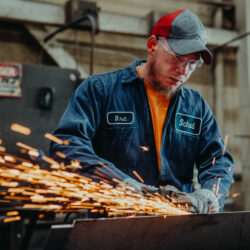 Big-block precast depends on having fabrication capacity that can produce shapes at the scale and tolerance a furnace reline requires. Schad operates off-site fabrication facilities in Detroit, Michigan and Louisville, Kentucky, and works with a network of specialized vendors for custom work such as big-block shapes and ceramic fiber modules. That combination of self-performed shop capacity and vendor partnerships gives a project team more flexibility to match the fabrication approach to what a specific outage actually needs, rather than defaulting to one method across the board.
How to Decide Which Method Fits Your Outage
A few questions tend to clarify which approach makes sense for a given reline:
How much outage time do you have, and how much of that is negotiable if the schedule slips?
Does the furnace geometry allow for large precast sections, or does it require a monolithic lining?
What’s the erosion and thermal exposure in the zone being relined, and how much does joint integrity matter there?
Are fabrication capacity and transport logistics available within a timeframe that supports your outage date?
For many furnaces, the answer isn’t purely one method or the other. It’s common to see precast used in accessible, higher-volume sections while traditional linings are reserved for complex geometry or high-wear zones. Every furnace and every outage plan is different, so the right mix depends on the specifics of your equipment and schedule.
If you’re planning your next outage and weighing precast against traditional lining, Schad’s team can help evaluate which approach fits your furnace geometry and timeline. Contact Schad to discuss your next reline.